TECHNICAL_FRANCE_RUNGIS_2

Accredited vs Traceable Calibration: What’s the Difference?

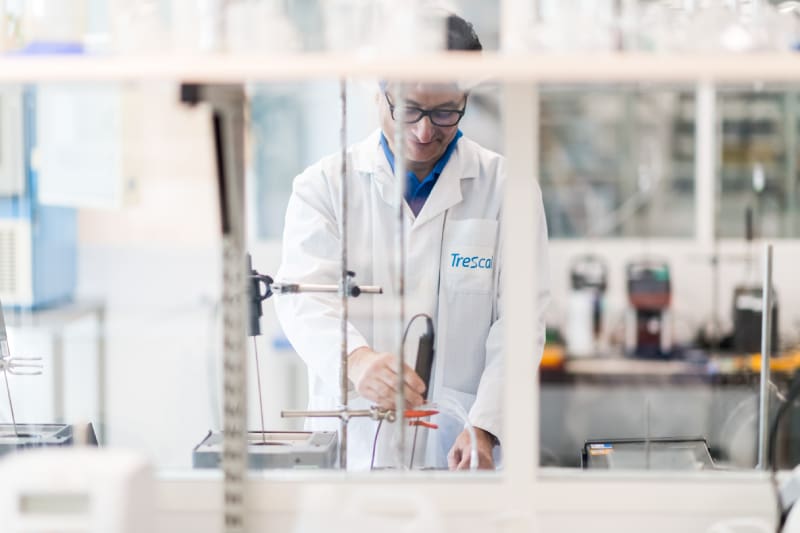
Calibration ensures the accuracy of our measurements and thus underpins trust in the world around us. When you request a calibration service, you must choose between accredited calibration and traceable calibration. They both aim to provide reliable results, but they provide different levels of assurance.

In traceable calibration, the equipment used to perform the calibration is calibrated against recognized national or international measurement standards. You can trace your tool’s measurement results through an uninterrupted and documented chain of calibrated equipment up to the highest international standard.

Think of it like a family tree for measurement equipment, connecting measurements to the ultimate source. You can request the calibration certificates of the standards used for the calibration of your equipment to check the traceability. 

Accredited calibration takes traceability a step further by ensuring the calibration process along with the equipment. It signifies that a national accreditation body has independently assessed the calibration service provider and deemed it competent to perform specific calibrations within a defined scope.

Both types of calibration provide a calibration certificate, but accredited calibration demonstrates the service provider’s adherence to ISO/IEC 17025 standards and provides additional proof of the traceability of the standards.

The choice between traceable and accredited calibration depends on your specific requirements, industry regulations, and risk tolerance. For many applications, traceable calibration provides sufficient assurance. However, industries with rigorous quality standards and regulatory requirements often mandate accredited calibration for enhanced reliability. When determining whether you need accredited calibration or traceable ask yourself:

  1. Is ISO/IEC 17025 accredited calibration mandated by my industry or external auditors? If not, traceable calibration may suit your needs.
  2. How critical are my measurements? If the accuracy of your measurements is critical to safety, quality, or has legal implications, then accredited calibration is the way to go. You can select traceable calibration if you use instruments in less critical applications, or the potential impact of an inaccurate reading is low.
  3. Do my customers or industry partners require proof of calibration from an accredited laboratory? If yes, choose accredited calibration.
  4. What level of detail do I need regarding measurement uncertainty? The level of detail you need will determine if you choose an accredited calibration or traceable calibration service. The evaluation of measurement uncertainties is in accordance with international documents ILAC P14, EA-4/02, GUM and associated documents. Most of the time, you have better uncertainties for accredited calibrations than for traceable calibrations.

All calibrations should be traceable to national or international standards; accredited calibration offers an additional layer of assurance through independent third-party assessment of the laboratory’s competence and quality management system.

99% of Trescal’s international network of in-house and on-site laboratories is accredited to ensure your confidence in your equipment and instruments. We have over 1,100+ accreditations, including ISO 17025, ISO 9001, ISO 45001, and ISO 14001, in 28 different sectors. We also provide traceable services so that you can trace the precision of your equipment to international standards without an accredited calibration.

mobile_calibration
How On-site Mobile Calibration can Optimize Your Production 

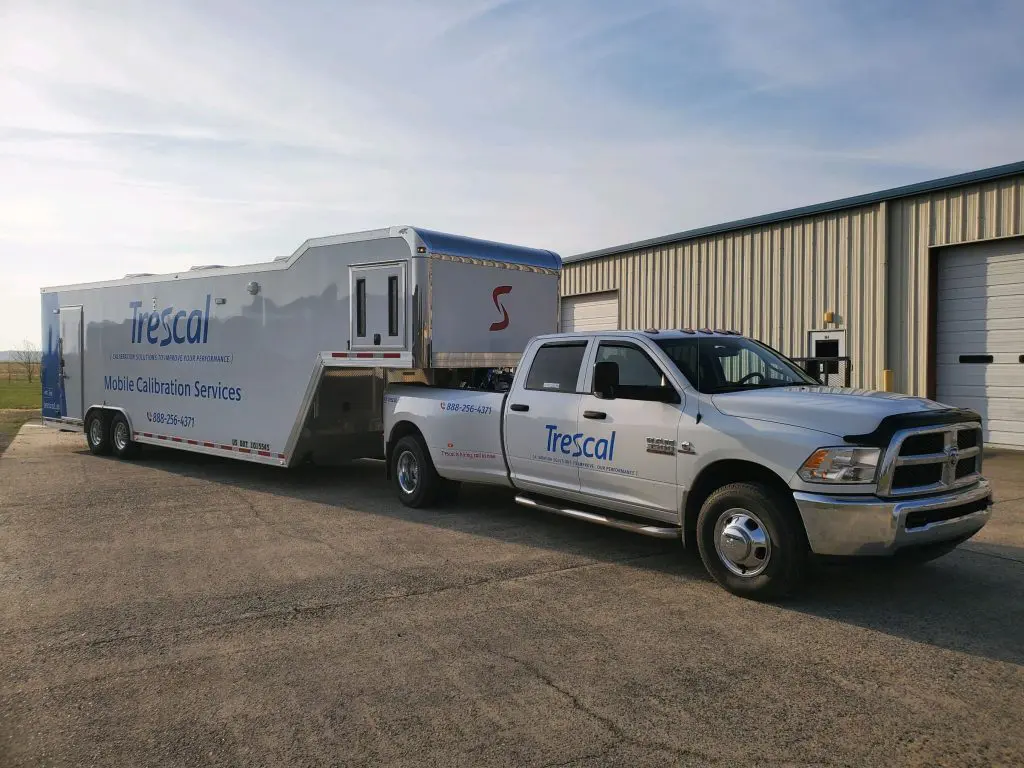
It’s not always possible to take your tools off the production line, package them for transport, wait for them to be returned and reinstall them for use. Sometimes you need on-site calibration to get production back up and running in a matter of hours. This is where mobile calibration comes into play.  

Mobile calibration is a service offered by calibration providers that bring their expertise and equipment directly to your facility. Instead of sending your instruments away for calibration, a mobile calibration laboratory comes to you, sets up a controlled environment and calibrates your equipment on-site.

Mobile calibration is advantageous for businesses that rely on critical measurement equipment and cannot afford significant downtime. It’s a convenient and efficient way to maintain the accuracy and reliability of your equipment. Benefits of mobile calibration include:

Since calibration is done on-site, you minimize the time your instruments are out of service and operations can continue as normal.

Technicians can calibrate instruments as needed and clear equipment backlog, ensuring optimal performance.

Mobile calibration takes place anywhere you happen to be, so you can manage your calibration program on your schedule, at your convenience.

With calibration technicians on your site, you no longer have to deal with the logistical hassle of removing equipment from the production line and preparing them for transport.

You reduce the risk of your equipment being damaged or lost in transport since the equipment remains within your facility.

While at your facility, technicians can provide expert advice on best practices of equipment calibration, maintenance and repair.

Your productivity depends on how reliable your tools are. As the global leader in calibration services, Trescal has experience with every instrument and domain so that you can feel confident in entrusting us with your entire asset portfolio. We calibrate 3.3 million instruments per year, covering 20,000 brands and 150,000 referenced instruments. We provide a full suite of precision services in our laboratories or on your site.

On-site Mobile Calibration Fleet

CIM november

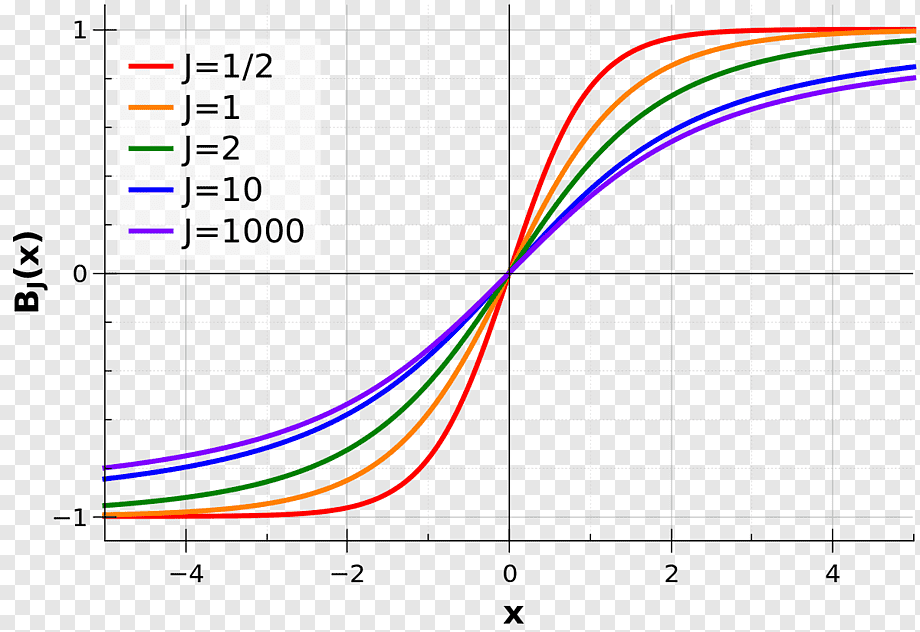
Understanding the Brillouin function in quantum mechanics

The Brillouin and Langevin functions are a pair of special functions that appear when studying idealized paramagnetic materials in statistical mechanics. French physicists Paul Langevin and Léon Brillouin contributed to the microscopic understanding of the magnetic properties of materials, which is why these functions are named after them. Thus, the Brillouin function is used to describe the dependence of the magnetic field on the total angular momentum J of the material.

Stephen Rickaby, Laboratory Manager for Trescal UK, presented a poster at the 2023 International Metrology Congress (CIM) on the Brillouin function and its utility in quantum mechanics.

Luxmeter

Compact Illuminance Meter Calibration with Integrating Sphere

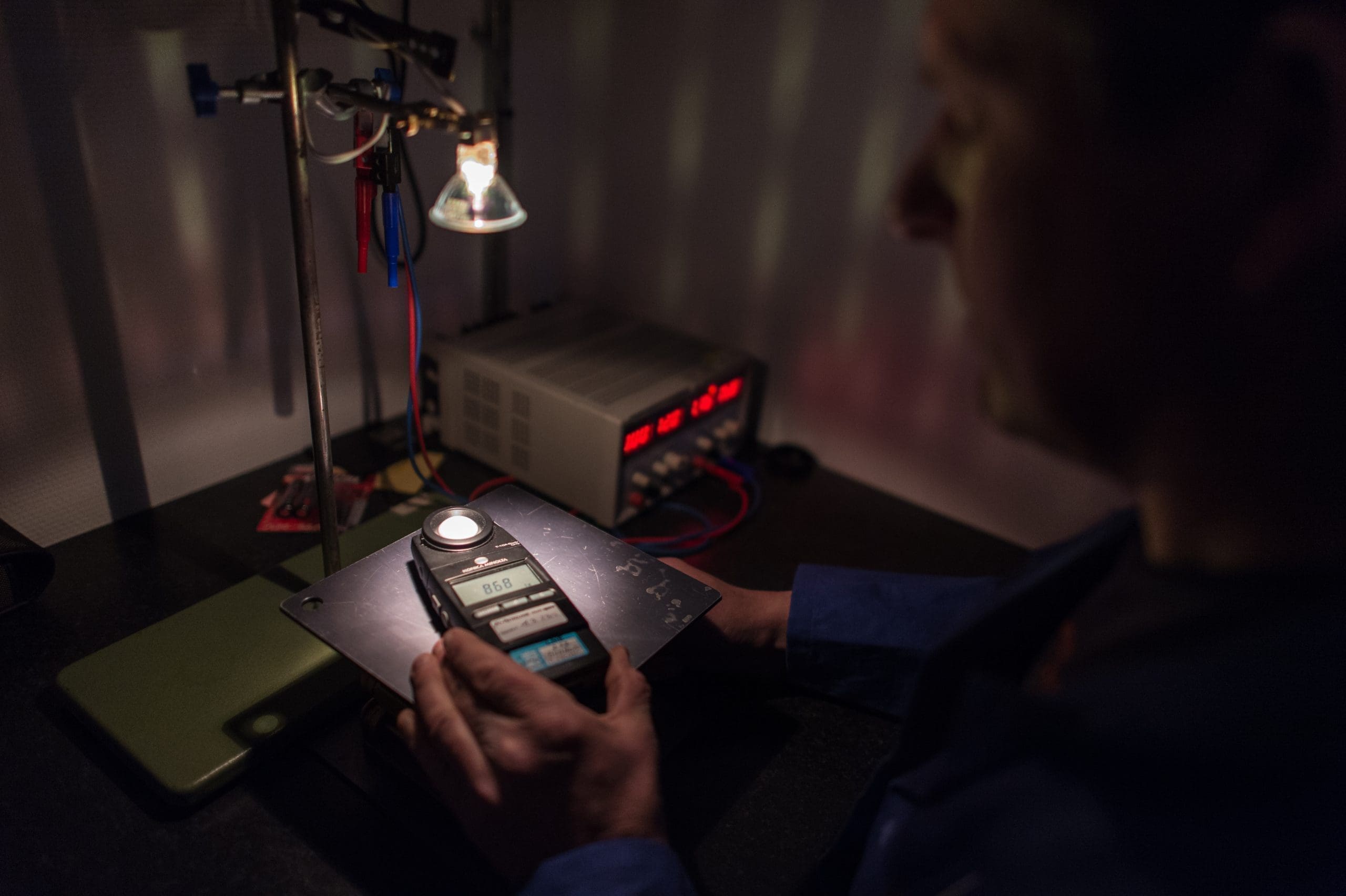
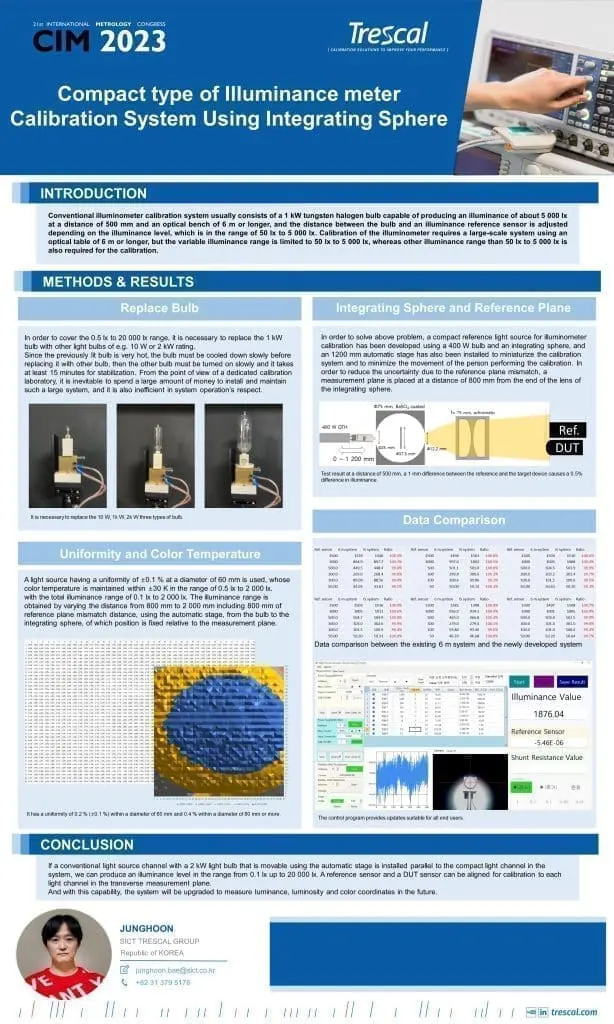
The conventional illuminometer calibration system usually consists of a 1 kW tungsten halogen bulb. This bulb is capable of producing an illuminance of about 5,000 lx when placed at a distance of 500 mm. To calibrate the illuminometer, an optical bench of 6 m or longer is required. The distance between the bulb and an illuminance reference sensor is adjusted depending on the illuminance level, which ranges from 50 lx to 5,000 lx. However, the current calibration system has a limited illuminance range, which excludes other illuminance ranges outside of 50 lx to 5,000 lx. Therefore, there is a need to develop a new calibration system that can accommodate a wider range of illuminance levels.

Radiometry-Photometry Technical Assistant Manager, Junghoon, from SICT, a Trescal company, presented a poster at the 2023 International Metrology Congress (CIM) on the different processes used to calibrate a compact type of Illuminance meter.

Copie de Executive Leadership Team Template (3)

Critical Process Parameters in Sterilization: Steam Requirements According to EU GMP Annex 1

EU GMP Annex 1: What is it?

The EU GMP Annex 1 sets out guidelines for the production of sterile medicinal products. The 2022 version of the Annex, which updates the 2008 version, is crucial for ensuring compliance with regulatory changes related to production and the environment, as well as for maintaining high quality standards in the manufacture of sterile medicinal products.

Updates in the requirements for the creation of sterile medicinal products helped to provide a better understanding of the risk management process. Though, parameters as well as new technological developments are essential to the manufacturing industry.  

Steam requirements according to EU GMP Annex 1

Roberto Español, Pharma Technical Manager for Trescal Spain, presented a poster at the 2023 International Metrology Congress (CIM) on the critical process parameters in sterilization specific to steam requirements.

Picture1

Revolutionizing Power Supply Calibration: Innovative Solution for Enhanced Precision and Efficiency

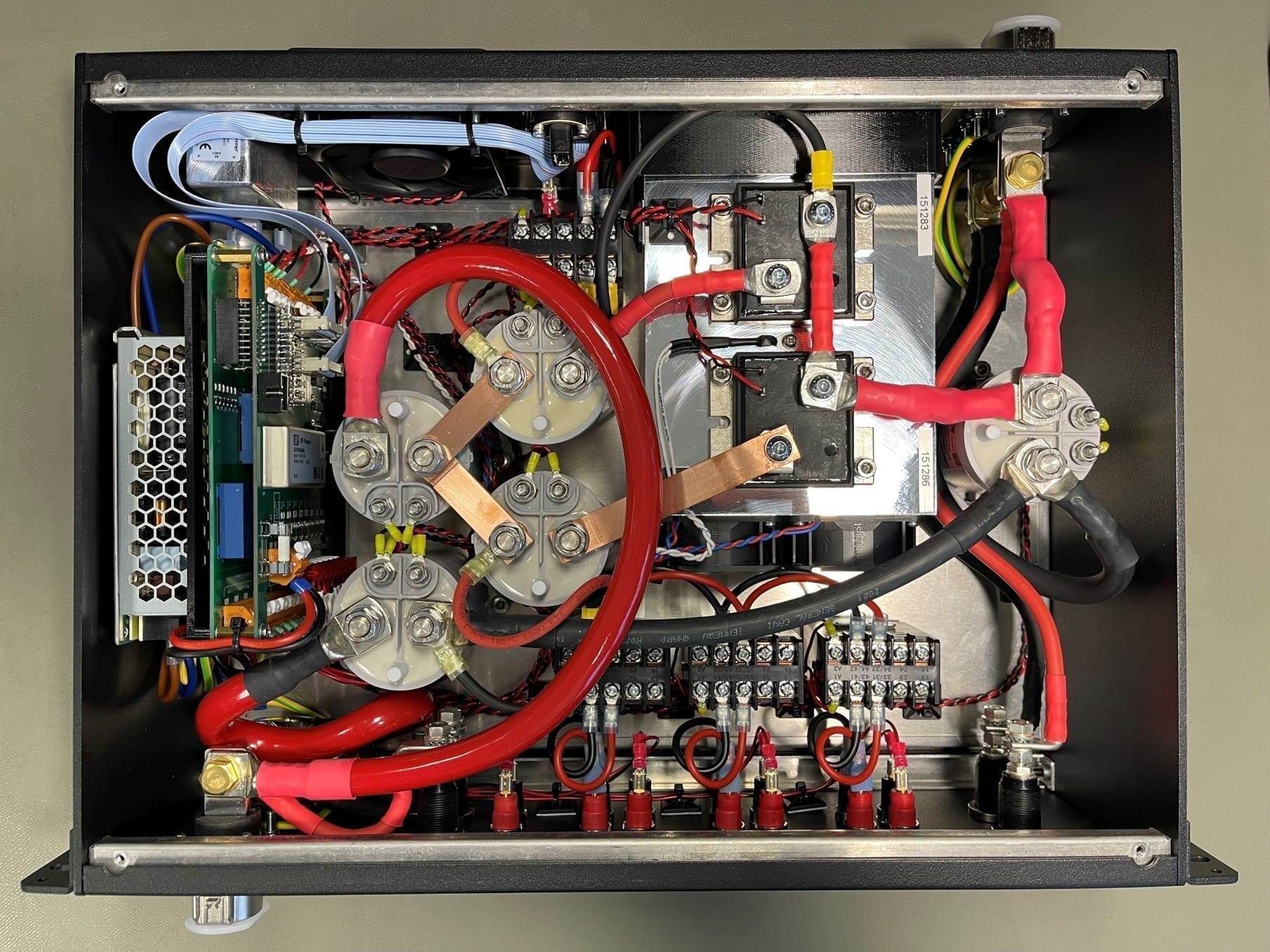
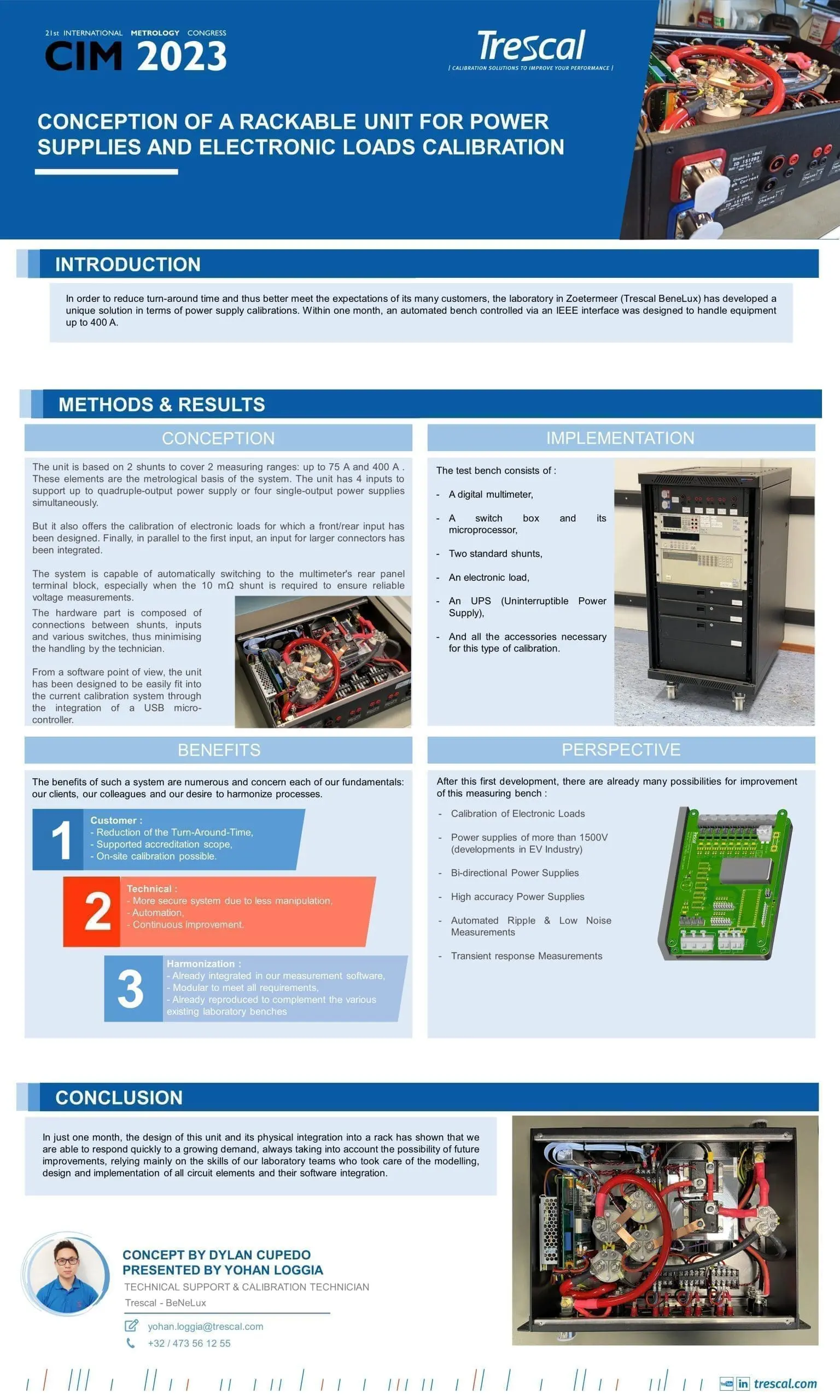
Trescal’s laboratory in Zoetermeer has developed a unique solution for power supply calibrations that has significantly reduced the turnaround time and improved customer satisfaction. The solution includes an automated bench that can handle equipment up to 400 A and is controlled through an IEEE interface. The innovative solution has streamlined the calibration process and provides precise and reliable results.

At the 2023 International Metrology Congress (CIM), Yohan Loggia, Technical Support & Calibration Technician, presented the conception, implementation and benefits of the automated bench.

CIM Poster
GMP Qualification and validation

Essential calibration for the life sciences industry

Advances in healthcare technology have improved disease treatment, diagnosis, monitoring, and therapy. However, reliable results require correctly functioning equipment. Periodic calibration and testing of medical equipment are essential to guarantee patient and healthcare professional safety.

Ruben Mendes, Electromedicine Manager for Trescal Portugal, presented a poster on Metrology in Health, focusing on Electromedicine calibration, at the 2023 International Metrology Congress (CIM).

GMP Qualification and validation

Trescal for Life Sciences

You need to trust that all your GxP systems, processes, software, equipment and facilities meet quality requirements so that you can focus on your core business. We provide documented evidence that you meet internal standards, GxP guidelines and regulatory compliance.

Learn more about our complete, flexible & qualitative Life Science offer.

city pollution

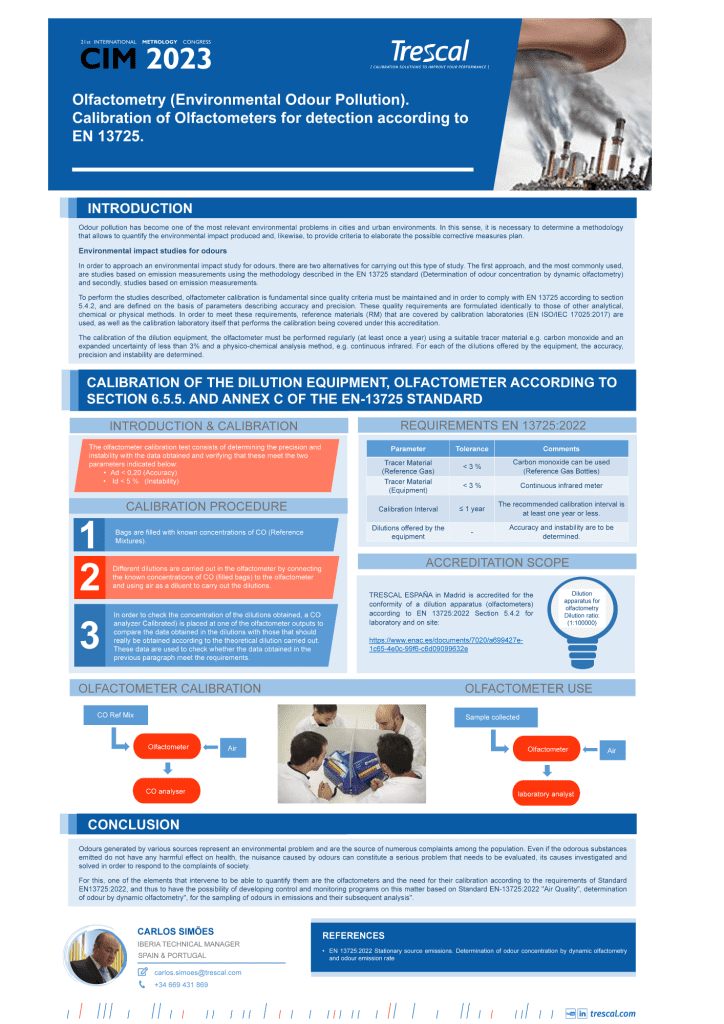
Calibration of olfactometers for odor detection according to EN 13725

Cities and urban environments face a significant problem with odor pollution. To address this issue, there is a need to develop a methodology that measures the level of environmental impact caused by this problem. Additionally, it is important to establish criteria for creating a corrective plan to tackle this problem.

Carlos Simões, the Technical Manager for Trescal Spain & Portugal presented a poster on the Calibration of Olfactometers for detection according to EN 13725 at the 2023 International Metrology Congress (CIM).

GMP Qualification and validation

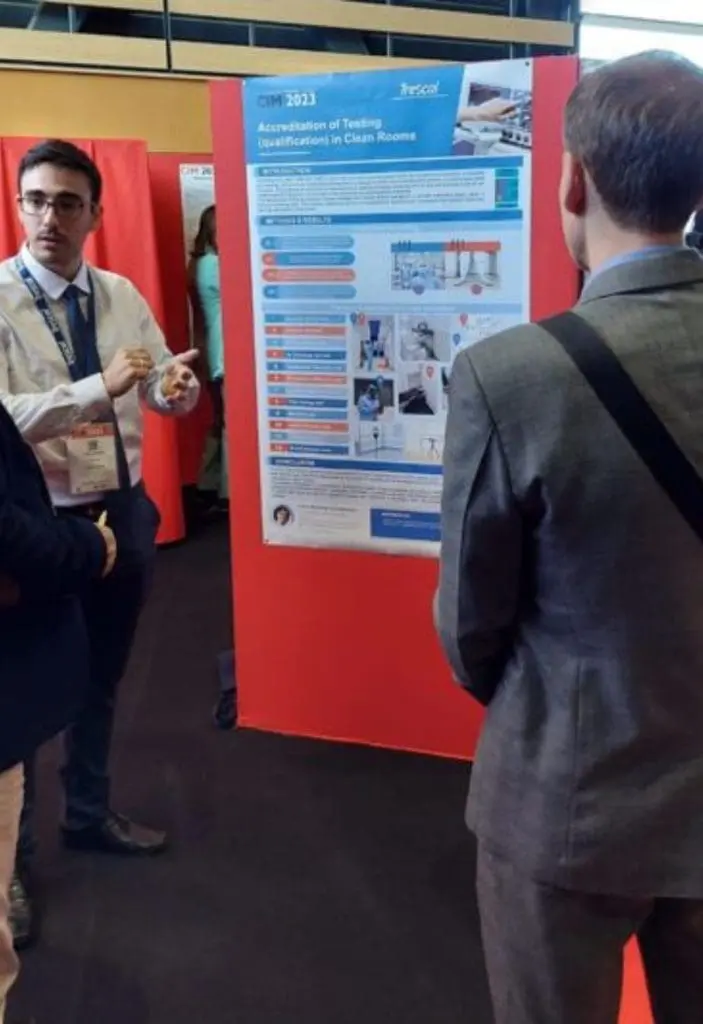
Accreditation of Testing in Clean Rooms

At the 2023 International Metrology Congress (CIM), Trescal’s technicians and engineers presented research and development techniques in various talks and round-table discussions.

Luan Arjonas de Camargo, the Development and IT Manager, explained how the Trescal Brazil team developed its accreditation process for testing (qualification) in clean rooms in preparation for Brazil’s National Institute of Metrology Standardization and Industrial Quality (INMETRO) evaluation.

Luan’s poster provides an overview of the method used to prepare for the accreditation evaluation process.

Man reading newspaper

Press Release: Trescal acquires three companies to strengthen leadership in Europe and the United States

Trescal, the global leader in calibration services, announced the acquisition of Cincinnati Precision Instruments (CPI) in Ohio, USA, CRT Cleanroom-Technology in Germany and Switzerland and Electronica Industrial de Alverca (EIA) in Portugal. These three companies add €16 million in total sales. Acquisitions since OMERS invested now total 42.

Established in 1962, Cincinnati Precision Instruments provides calibration services in nine accredited domains, with strong capabilities in humidity, hardness and pressure. CPI mainly serves the automotive and aerospace industries. This acquisition allows Trescal to extend its geographic coverage to southern Ohio, Indiana and Kentucky.

CRT Cleanroom-Technology operates two laboratories in Alsdorf, Germany, and Stein, Switzerland, to provide cleanroom qualification, measurement and calibration services. This acquisition strengthens Trescal’s existing life sciences expertise in Central Europe. CRT Cleanroom-Technology offers extensive capabilities in airborne particle counters, microbial air samplers, thermal process qualification and flow visualization to pharmaceutical and biopharmaceutical clients.

Founded in 1989, EIA comprises two accredited laboratories in Lisbon and Porto, serving mainly the life science and food and beverage industries. EIA’s comprehensive set of accreditations expands Trescal’s calibration, testing and legal metrology scopes in the Iberian peninsula. With this acquisition, Trescal becomes the leading provider of calibration and qualification services in Portugal.

Guillaume Caroit, Trescal CEO: “These acquisitions embody our will to further develop our services for life science and food and beverage clients. Together, these industries will represent close to 25% of our sales by the end of 2022.”


ABOUT TRESCAL

Trescal is the global leader in calibration services. It offers an array of industries a single-source solution for calibration, measurement, repair, qualification, validation and asset management across the globe. Its technicians and experts carry out accredited and non-accredited services for all measured variables and measuring instruments in all technical domains, whether physical, electrical or mechanical. Trescal’s 4,100 team members perform more than 3.3 million operations per year, including 27,000 repairs across 150,000 types of instruments and 20,000 brands.

To learn more visit trescal.com.


CONTACT

Amélie Janson

Marketing and Communications Director

amelie.janson@trescal.com

Tel : +33 (0) 6 02 13 33 84

TECHNICAL_FRANCE_RUNGIS_2

Accredited vs Traceable Calibration: What’s the Difference?

Calibration ensures the accuracy of our measurements and thus underpins trust in the world around us. When you request a calibration service, you must choose between accredited calibration and traceable calibration. They both aim to provide reliable results, but they provide different levels of assurance.

In traceable calibration, the equipment used to perform the calibration is calibrated against recognized national or international measurement standards. You can trace your tool’s measurement results through an uninterrupted and documented chain of calibrated equipment up to the highest international standard.

Think of it like a family tree for measurement equipment, connecting measurements to the ultimate source. You can request the calibration certificates of the standards used for the calibration of your equipment to check the traceability. 

Accredited calibration takes traceability a step further by ensuring the calibration process along with the equipment. It signifies that a national accreditation body has independently assessed the calibration service provider and deemed it competent to perform specific calibrations within a defined scope.

Both types of calibration provide a calibration certificate, but accredited calibration demonstrates the service provider’s adherence to ISO/IEC 17025 standards and provides additional proof of the traceability of the standards.

The choice between traceable and accredited calibration depends on your specific requirements, industry regulations, and risk tolerance. For many applications, traceable calibration provides sufficient assurance. However, industries with rigorous quality standards and regulatory requirements often mandate accredited calibration for enhanced reliability. When determining whether you need accredited calibration or traceable ask yourself:

  1. Is ISO/IEC 17025 accredited calibration mandated by my industry or external auditors? If not, traceable calibration may suit your needs.
  2. How critical are my measurements? If the accuracy of your measurements is critical to safety, quality, or has legal implications, then accredited calibration is the way to go. You can select traceable calibration if you use instruments in less critical applications, or the potential impact of an inaccurate reading is low.
  3. Do my customers or industry partners require proof of calibration from an accredited laboratory? If yes, choose accredited calibration.
  4. What level of detail do I need regarding measurement uncertainty? The level of detail you need will determine if you choose an accredited calibration or traceable calibration service. The evaluation of measurement uncertainties is in accordance with international documents ILAC P14, EA-4/02, GUM and associated documents. Most of the time, you have better uncertainties for accredited calibrations than for traceable calibrations.

All calibrations should be traceable to national or international standards; accredited calibration offers an additional layer of assurance through independent third-party assessment of the laboratory’s competence and quality management system.

99% of Trescal’s international network of in-house and on-site laboratories is accredited to ensure your confidence in your equipment and instruments. We have over 1,100+ accreditations, including ISO 17025, ISO 9001, ISO 45001, and ISO 14001, in 28 different sectors. We also provide traceable services so that you can trace the precision of your equipment to international standards without an accredited calibration.

mobile_calibration
How On-site Mobile Calibration can Optimize Your Production 

It’s not always possible to take your tools off the production line, package them for transport, wait for them to be returned and reinstall them for use. Sometimes you need on-site calibration to get production back up and running in a matter of hours. This is where mobile calibration comes into play.  

Mobile calibration is a service offered by calibration providers that bring their expertise and equipment directly to your facility. Instead of sending your instruments away for calibration, a mobile calibration laboratory comes to you, sets up a controlled environment and calibrates your equipment on-site.

Mobile calibration is advantageous for businesses that rely on critical measurement equipment and cannot afford significant downtime. It’s a convenient and efficient way to maintain the accuracy and reliability of your equipment. Benefits of mobile calibration include:

Since calibration is done on-site, you minimize the time your instruments are out of service and operations can continue as normal.

Technicians can calibrate instruments as needed and clear equipment backlog, ensuring optimal performance.

Mobile calibration takes place anywhere you happen to be, so you can manage your calibration program on your schedule, at your convenience.

With calibration technicians on your site, you no longer have to deal with the logistical hassle of removing equipment from the production line and preparing them for transport.

You reduce the risk of your equipment being damaged or lost in transport since the equipment remains within your facility.

While at your facility, technicians can provide expert advice on best practices of equipment calibration, maintenance and repair.

Your productivity depends on how reliable your tools are. As the global leader in calibration services, Trescal has experience with every instrument and domain so that you can feel confident in entrusting us with your entire asset portfolio. We calibrate 3.3 million instruments per year, covering 20,000 brands and 150,000 referenced instruments. We provide a full suite of precision services in our laboratories or on your site.

On-site Mobile Calibration Fleet

CIM november

Understanding the Brillouin function in quantum mechanics

The Brillouin and Langevin functions are a pair of special functions that appear when studying idealized paramagnetic materials in statistical mechanics. French physicists Paul Langevin and Léon Brillouin contributed to the microscopic understanding of the magnetic properties of materials, which is why these functions are named after them. Thus, the Brillouin function is used to describe the dependence of the magnetic field on the total angular momentum J of the material.

Stephen Rickaby, Laboratory Manager for Trescal UK, presented a poster at the 2023 International Metrology Congress (CIM) on the Brillouin function and its utility in quantum mechanics.

Luxmeter

Compact Illuminance Meter Calibration with Integrating Sphere

The conventional illuminometer calibration system usually consists of a 1 kW tungsten halogen bulb. This bulb is capable of producing an illuminance of about 5,000 lx when placed at a distance of 500 mm. To calibrate the illuminometer, an optical bench of 6 m or longer is required. The distance between the bulb and an illuminance reference sensor is adjusted depending on the illuminance level, which ranges from 50 lx to 5,000 lx. However, the current calibration system has a limited illuminance range, which excludes other illuminance ranges outside of 50 lx to 5,000 lx. Therefore, there is a need to develop a new calibration system that can accommodate a wider range of illuminance levels.

Radiometry-Photometry Technical Assistant Manager, Junghoon, from SICT, a Trescal company, presented a poster at the 2023 International Metrology Congress (CIM) on the different processes used to calibrate a compact type of Illuminance meter.

Copie de Executive Leadership Team Template (3)

Critical Process Parameters in Sterilization: Steam Requirements According to EU GMP Annex 1

EU GMP Annex 1: What is it?

The EU GMP Annex 1 sets out guidelines for the production of sterile medicinal products. The 2022 version of the Annex, which updates the 2008 version, is crucial for ensuring compliance with regulatory changes related to production and the environment, as well as for maintaining high quality standards in the manufacture of sterile medicinal products.

Updates in the requirements for the creation of sterile medicinal products helped to provide a better understanding of the risk management process. Though, parameters as well as new technological developments are essential to the manufacturing industry.  

Steam requirements according to EU GMP Annex 1

Roberto Español, Pharma Technical Manager for Trescal Spain, presented a poster at the 2023 International Metrology Congress (CIM) on the critical process parameters in sterilization specific to steam requirements.

Picture1

Revolutionizing Power Supply Calibration: Innovative Solution for Enhanced Precision and Efficiency

Trescal’s laboratory in Zoetermeer has developed a unique solution for power supply calibrations that has significantly reduced the turnaround time and improved customer satisfaction. The solution includes an automated bench that can handle equipment up to 400 A and is controlled through an IEEE interface. The innovative solution has streamlined the calibration process and provides precise and reliable results.

At the 2023 International Metrology Congress (CIM), Yohan Loggia, Technical Support & Calibration Technician, presented the conception, implementation and benefits of the automated bench.

CIM Poster
GMP Qualification and validation

Essential calibration for the life sciences industry

Advances in healthcare technology have improved disease treatment, diagnosis, monitoring, and therapy. However, reliable results require correctly functioning equipment. Periodic calibration and testing of medical equipment are essential to guarantee patient and healthcare professional safety.

Ruben Mendes, Electromedicine Manager for Trescal Portugal, presented a poster on Metrology in Health, focusing on Electromedicine calibration, at the 2023 International Metrology Congress (CIM).

GMP Qualification and validation

Trescal for Life Sciences

You need to trust that all your GxP systems, processes, software, equipment and facilities meet quality requirements so that you can focus on your core business. We provide documented evidence that you meet internal standards, GxP guidelines and regulatory compliance.

Learn more about our complete, flexible & qualitative Life Science offer.

city pollution

Calibration of olfactometers for odor detection according to EN 13725

Cities and urban environments face a significant problem with odor pollution. To address this issue, there is a need to develop a methodology that measures the level of environmental impact caused by this problem. Additionally, it is important to establish criteria for creating a corrective plan to tackle this problem.

Carlos Simões, the Technical Manager for Trescal Spain & Portugal presented a poster on the Calibration of Olfactometers for detection according to EN 13725 at the 2023 International Metrology Congress (CIM).

GMP Qualification and validation

Accreditation of Testing in Clean Rooms

At the 2023 International Metrology Congress (CIM), Trescal’s technicians and engineers presented research and development techniques in various talks and round-table discussions.

Luan Arjonas de Camargo, the Development and IT Manager, explained how the Trescal Brazil team developed its accreditation process for testing (qualification) in clean rooms in preparation for Brazil’s National Institute of Metrology Standardization and Industrial Quality (INMETRO) evaluation.

Luan’s poster provides an overview of the method used to prepare for the accreditation evaluation process.

Man reading newspaper

Press Release: Trescal acquires three companies to strengthen leadership in Europe and the United States

Trescal, the global leader in calibration services, announced the acquisition of Cincinnati Precision Instruments (CPI) in Ohio, USA, CRT Cleanroom-Technology in Germany and Switzerland and Electronica Industrial de Alverca (EIA) in Portugal. These three companies add €16 million in total sales. Acquisitions since OMERS invested now total 42.

Established in 1962, Cincinnati Precision Instruments provides calibration services in nine accredited domains, with strong capabilities in humidity, hardness and pressure. CPI mainly serves the automotive and aerospace industries. This acquisition allows Trescal to extend its geographic coverage to southern Ohio, Indiana and Kentucky.

CRT Cleanroom-Technology operates two laboratories in Alsdorf, Germany, and Stein, Switzerland, to provide cleanroom qualification, measurement and calibration services. This acquisition strengthens Trescal’s existing life sciences expertise in Central Europe. CRT Cleanroom-Technology offers extensive capabilities in airborne particle counters, microbial air samplers, thermal process qualification and flow visualization to pharmaceutical and biopharmaceutical clients.

Founded in 1989, EIA comprises two accredited laboratories in Lisbon and Porto, serving mainly the life science and food and beverage industries. EIA’s comprehensive set of accreditations expands Trescal’s calibration, testing and legal metrology scopes in the Iberian peninsula. With this acquisition, Trescal becomes the leading provider of calibration and qualification services in Portugal.

Guillaume Caroit, Trescal CEO: “These acquisitions embody our will to further develop our services for life science and food and beverage clients. Together, these industries will represent close to 25% of our sales by the end of 2022.”


ABOUT TRESCAL

Trescal is the global leader in calibration services. It offers an array of industries a single-source solution for calibration, measurement, repair, qualification, validation and asset management across the globe. Its technicians and experts carry out accredited and non-accredited services for all measured variables and measuring instruments in all technical domains, whether physical, electrical or mechanical. Trescal’s 4,100 team members perform more than 3.3 million operations per year, including 27,000 repairs across 150,000 types of instruments and 20,000 brands.

To learn more visit trescal.com.


CONTACT

Amélie Janson

Marketing and Communications Director

amelie.janson@trescal.com

Tel : +33 (0) 6 02 13 33 84

This site is registered on wpml.org as a development site. Switch to a production site key to remove this banner.